Institutions have sunk their teeth into BTC, but most of that capital is still undigested. As of Q4 2025, less than 0.8% of the BTC supply is engaged in any form of DeFi. In contrast, Ethereum has 48% of its supply circulating through lending markets, liquidity pools, and staking mechanisms.
The reason? Trust, or more critically, not having to rely on trust. For Ethereum users, a trust-minimized decentralized DeFi ecosystem makes it easier for almost half of the chain’s supply to become active, productive capital.
On the other hand, wrapped BTC solutions and bridges force users to rely on trust. They introduce custodial risk, redemption friction, and regulatory headaches. Institutions holding BTC won’t deploy capital unless the infrastructure matches the security profile that got them into BTC in the first place.
The Custody Cost Dilemma
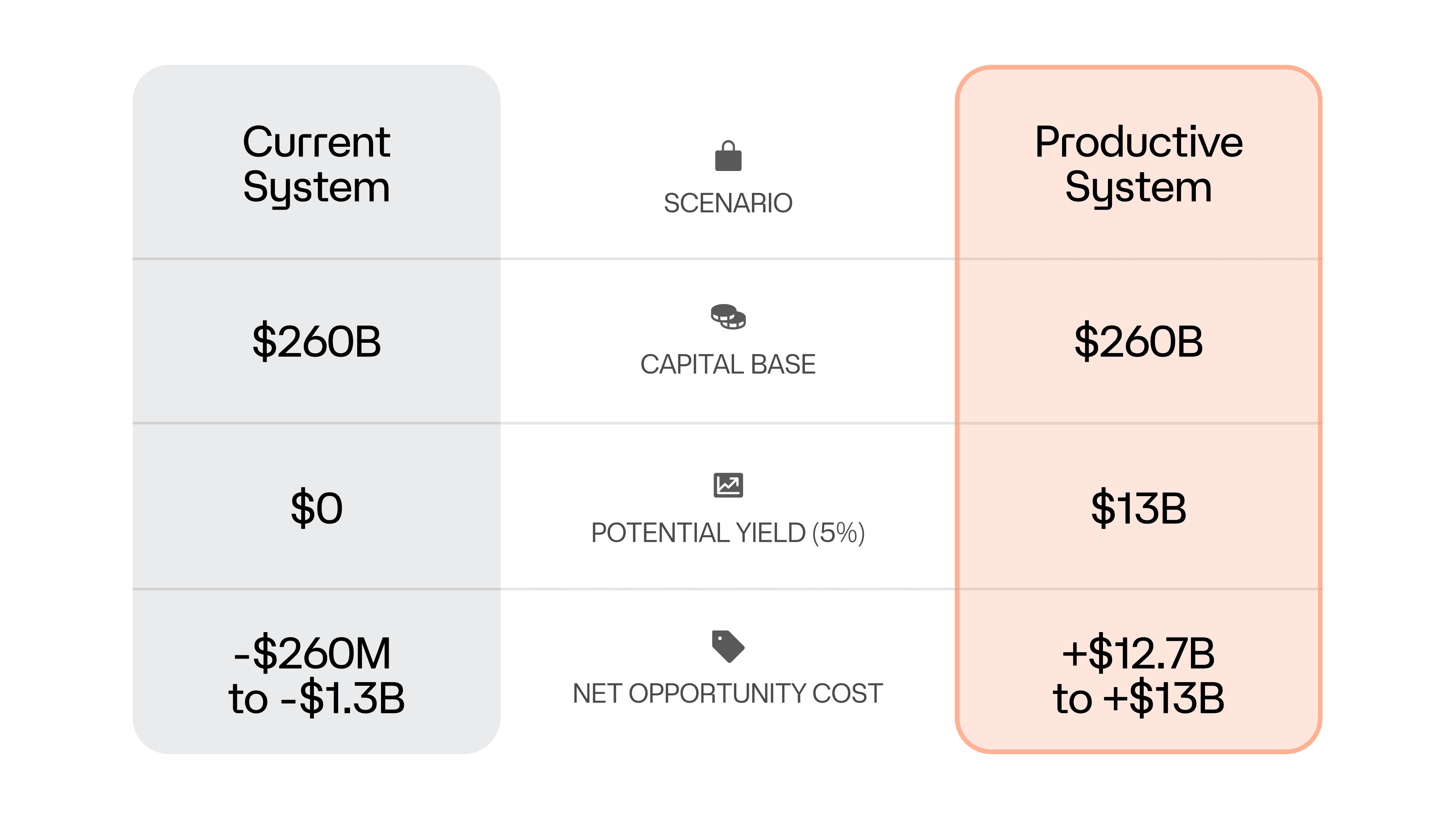
Institutions pay $260M–$1.3B per year in custody fees, and accounting for opportunity cost, the drag is even greater:
Enter Hemi
Hemi’s design avoids the usual traps:
No synthetic BTC
No federated bridges
No new consensus assumptions
Instead, Hemi combines Bitcoin’s Proof-of-Work with Ethereum’s programmability in a single supernetwork. The result is a secure, programmable capital layer where BTC can actually participate in DeFi.
Applications built on Hemi can:
Verify BTC collateral onchain (via hVM)
Launch BTC-native lending markets
Mint stablecoins backed by actual BTC
Institutions Need a New Standard
A central security model isn’t enough. Institutions need:
Yield strategies with measurable risk-return profiles
Custody models compatible with internal controls
Audit-friendly transparency across GAAP and IFRS
Hemi delivers all three, along with over 100 protocol partnerships and integrations across DeFi platforms, including lending, trading, liquidity provision, perpetuals, and more, to bridge the operational gap.
Visit the Hemi Portal now and participate in Bitcoin's productive layer.